

Chair Restoration: The Art of Caning
05sep9:00 am1:00 pmChair Restoration: The Art of CaningWith Paul Russo
Time
(Saturday) 9:00 am - 1:00 pm
Location
ArtisanABQ
3017 Monte Vista Blvd NE
Event Details
Chair Restoration: The Art of Caning With Paul Russo Saturday, September 5th & September 12th / 9am – 1pm Course Description: So, you’re thinking about learning the craft of chair
Event Details
Chair Restoration: The Art of Caning
With Paul Russo
Saturday, September 5th & September 12th / 9am – 1pm
Course Description:
So, you’re thinking about learning the craft of chair caning? Welcome to the club!
My own chair caning journey began in 2004. (Ask me about my grandmother’s caned chair when class starts—it’s a story worth telling.) I’ve been caning chairs professionally since 2008, and somewhere along the way I became one of those people who gets genuinely excited about woven seats.
A little background: chair caning has been around for a very long time. There is evidence of caned furniture dating back to Ancient Egypt. The cane itself comes from a tropical vine native to regions such as Malaysia and the Philippines, while the weaving techniques are believed to have originated in India. By the 17th century, caned chairs were showing up in Europe, where they became a symbol of wealth and high society. Before long, they made their way to the Americas, and the rest is woven history.
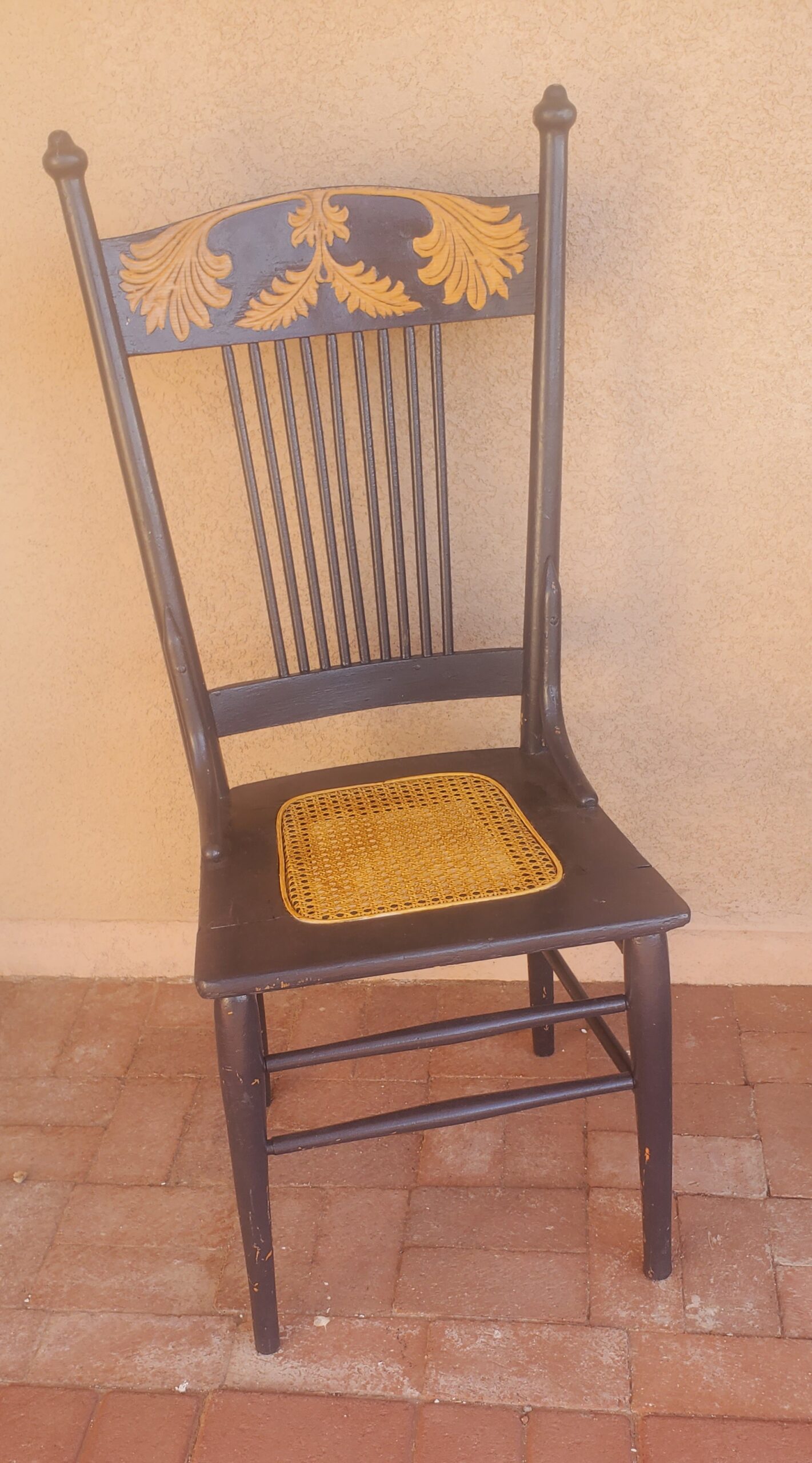
There are two main types of chair caning: hand-woven cane and pressed cane. During the late 19th century, manufacturers began producing pre-woven sheets of cane, allowing factories to install pressed cane rather than weaving each seat by hand. Both methods are still used today, and because every chair has its own personality—and occasionally its own stubborn streak—this class is designed to teach the method that matches your chair.
Here’s a quick way to tell what you have: flip your chair over and take a look at the underside of the seat. If you can see the individual strands passing through holes and being woven together, congratulations—you have a hand-caning project. If the underside is solid and the cane sits in a groove around the edge, you’ll be working with pressed cane.
The class begins with a demonstration, and then I’ll work with each of you individually as you begin restoring your chair. I’ve found that most beginners reach their caning limit after about three or four hours, so we’ve split the workshop into two sessions. Your hands—and your patience—will thank you.
Maybe you have a family heirloom that’s been waiting in the garage for years, patiently collecting dust until the right opportunity came along. Maybe you’re simply curious about the craft. Maybe you’ve looked at a worn-out chair and thought, “I can fix that.” Whatever brought you here, I’m glad it did.
Before class begins, I’ll need to meet both you and your chair so we can determine the correct size and type of cane needed for the project.
I look forward to meeting you, hearing the story behind your chair, and helping you bring it back to life.
Materials:
All tools will be provided
*Student’s must supply their own Chair for Caning
*This class will be held in our downstairs classroom, which is unfortunately inaccessible by wheelchair or similar mobility devices.
No Refunds past September 2nd